MPPT vs. PWM Charge Controllers in Off-Grid Solar Inverters Explained

The charge controller is one of the most technically important components in any off-grid solar system. It regulates how solar panels charge your batteries, directly affecting efficiency and battery health. Two main technologies dominate the market: PWM and MPPT. Understanding the difference between them helps you make a smarter investment decision.
What Is a PWM Charge Controller?
PWM stands for Pulse Width Modulation, a relatively simple battery charging technology. The controller connects solar panels directly to the battery bank through rapid switching. When batteries are near full charge, the controller reduces current flow using pulses of power. This approach is reliable and affordable but leaves significant energy on the table.
PWM controllers work best when panel voltage closely matches battery voltage. For a 12V battery, you ideally want a panel with a peak power voltage around 17 to 18 volts. When panel voltage is significantly higher than battery voltage, the excess is simply wasted as heat. This mismatch problem becomes more significant in larger systems with higher-voltage panel strings.
What Is an MPPT Charge Controller?
MPPT stands for Maximum Power Point Tracking, a more sophisticated approach to solar charging. The controller continuously scans the solar panel’s output to find its ideal operating point. It then converts this power to the voltage and current most efficiently usable by the battery bank. This process typically captures 15 to 30 percent more energy than PWM in real conditions.
MPPT technology is particularly valuable when panel voltage significantly exceeds battery voltage. A high-voltage panel string can be efficiently converted down to battery charging voltage. This means you can use fewer, more efficient high-voltage panels in your system design. MPPT controllers also perform better in cold temperatures and during partial shading conditions.
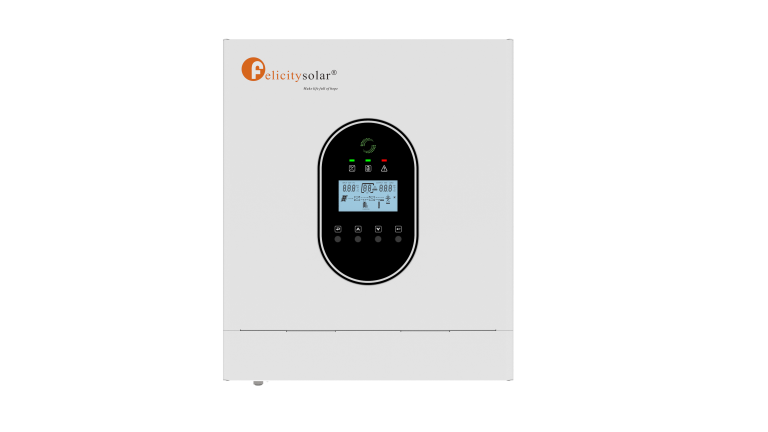
Felicity Solar integrates industry-leading MPPT technology directly into their off-grid solar inverter units, eliminating the need for a separate charge controller and simplifying overall system design and wiring.
Energy Harvest Comparison
Real-world testing consistently shows MPPT controllers outperforming PWM by 15 to 30 percent. The advantage is greatest when panel temperature is low and sky conditions are variable. Cold panels produce higher voltage than their rated specs, which MPPT can exploit fully. PWM controllers simply clamp this excess voltage and cannot harvest the additional available power.
In a system consuming 3KWh daily, a 25 percent efficiency improvement means 750Wh more usable energy per day. Over a year, this equals more than 270KWh of additional energy from the same solar array. This extra energy can power appliances for additional hours or reduce the required panel capacity. The financial and practical value of MPPT over PWM is significant over a system’s lifetime.
System Sizing Implications
MPPT controllers allow greater flexibility in solar panel selection and string configuration. You can use high-voltage panel strings that would be incompatible with PWM technology. This enables the use of modern high-efficiency panels that have higher open-circuit voltages. Greater design flexibility means you can optimize your system for cost, space, and performance simultaneously.
With PWM, your panel configuration options are significantly more constrained. Panels must be wired to match battery voltage closely, limiting your design choices. Large PWM systems require many parallel panel strings with thicker, more expensive wiring. MPPT’s ability to accept higher-voltage inputs reduces wiring costs in larger system installations.
Cost Considerations
MPPT controllers are more expensive than PWM units of equivalent current rating. However, the additional energy harvest typically pays for the price difference within one to two years. For systems smaller than 200W in mild climates, PWM can be a cost-effective choice. For any system above 400W or in cold climates, MPPT is almost always the better economic choice.
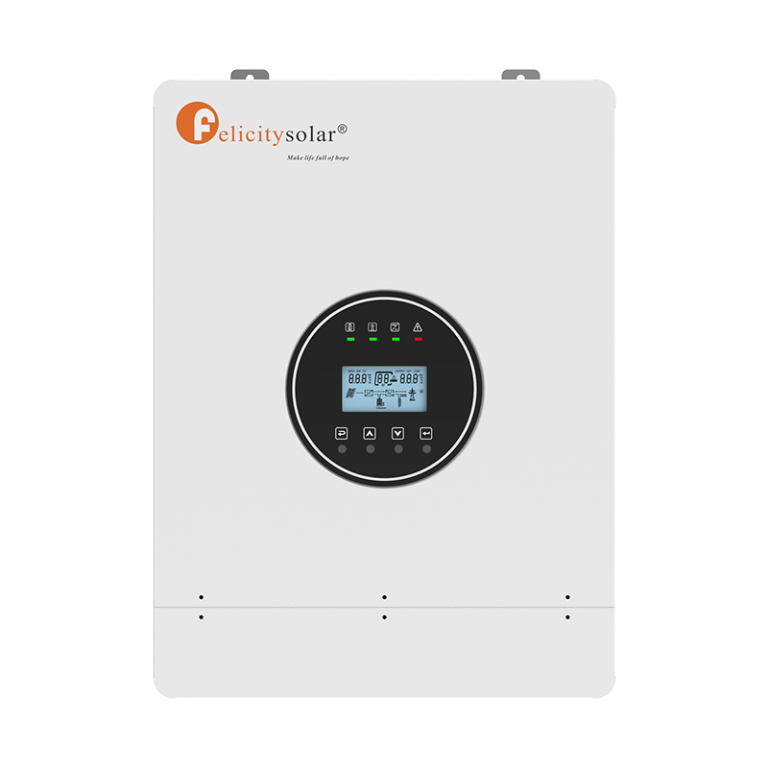
When an MPPT controller is integrated into the inverter unit, the cost premium is further reduced. All-in-one inverter-chargers with built-in MPPT eliminate the need for a separate controller entirely. This integration saves both money and installation complexity for the system owner. Felicity Solar’s inverter range is built on this integrated all-in-one design philosophy.
Temperature Performance Differences
Solar panel performance changes significantly with temperature fluctuations throughout the day. Cold panels produce higher voltage than their rated specifications at standard test conditions. MPPT controllers automatically detect and take advantage of this increased voltage. PWM controllers cannot exploit higher panel voltage and simply clamp it to the battery level.
In cold climates, the MPPT advantage over PWM is especially pronounced during winter months. Systems in Norway, Canada, or high-altitude locations see some of the greatest benefits. In hot tropical climates, panels produce less voltage, reducing the MPPT advantage somewhat. However, even in hot climates, MPPT consistently outperforms PWM across the seasonal cycle.
Which Should You Choose?
For any serious residential or commercial off-grid system, MPPT is the clear professional recommendation. The performance advantages, design flexibility, and long-term energy gains strongly favor MPPT technology. PWM remains appropriate only for small, simple, budget-constrained systems with matched panel and battery voltages. Even in those cases, the cost difference is rarely worth the performance compromise.
When your inverter already includes an integrated MPPT controller, the decision is made for you. Focus instead on verifying the MPPT controller’s maximum input voltage and current ratings match your panel array specifications. Proper matching of MPPT controller capacity to your solar array is essential for safe and efficient operation. Always verify these specifications with your inverter manufacturer before finalizing your system design.