Blockchain’s Role in Secure SIM Services
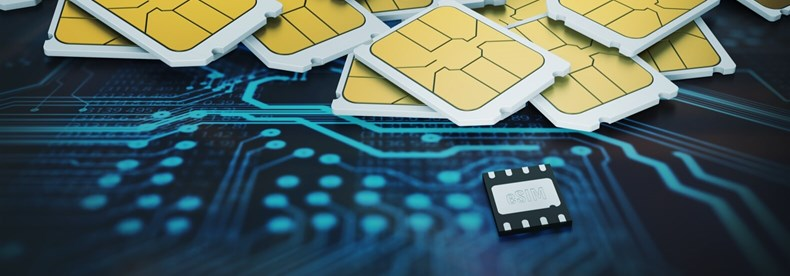
You’re checking a live bitcoin price feed on your phone when a notification pops up asking you to approve a login somewhere else. No password required. Just a quick biometric scan, and you’re authenticated through cryptographic verification that’s mathematically impossible to fake.
This isn’t some distant future scenario. It’s happening right now, driven by a crisis that’s making headlines for all the wrong reasons.
In March 2025, T-Mobile paid out $33 million in arbitration after a single SIM swap attack allowed thieves to steal approximately $38 million from a customer’s cryptocurrency wallet. That’s not a typo. One attack. One victim. Tens of millions lost.
The problem runs deeper than isolated incidents. The UK experienced a staggering 1,055% increase in SIM swap fraud from 2023 to 2024—jumping from 289 cases to nearly 3,000. We’re not talking about a gradual uptick here. This is an epidemic.
But here’s what’s interesting: while criminals exploit our password-dependent systems, blockchain technology is quietly making passwords obsolete. The question isn’t whether we’ll abandon traditional authentication. It’s how quickly we can make the switch.
When Your Phone Becomes Your Worst Enemy
Your smartphone was supposed to make life more secure. Instead, it’s become the perfect weapon against you.
The mechanics are surprisingly simple. Criminals don’t need to hack your phone directly—they just need to convince your carrier that they’re you. With over 7 billion credentials floating around dark-web markets from 2024’s data breaches, fraudsters have plenty of personal information to work with. This is exactly why the Philippines implemented mandatory SIM registration requirements through initiatives like the DITO SIM Registration Guide – requiring valid ID verification and face authentication to combat crimes and online fraud activities.
Here’s where it gets worse. Despite everything we know about SMS vulnerabilities, 42% of UK banks still use SMS as their default second factor in 2024. In the cryptocurrency world, that number jumps to 61% of exchanges. We’re essentially using a broken lock to protect our most valuable assets.
The technical reality is sobering. SS7 network vulnerabilities mean SMS messages can be intercepted without touching your device. eSIM technology, designed to make our lives easier, has actually reduced attack cycles from hours to under five minutes through simple QR code activation. Network security challenges extend beyond just SIM cards – users also face firewall restrictions that can block access to essential services. For those dealing with network access issues, understanding how to bypass firewall restrictions safely becomes crucial for maintaining connectivity.
Traditional knowledge-based verification makes matters worse. Your mother’s maiden name? It’s probably in a data breach somewhere. Your first pet’s name? Social media tells that story.
The fundamental problem isn’t that criminals are getting smarter—though they are. It’s that we’re still using authentication methods designed for a world that no longer exists. A world where personal information stayed personal and phone numbers stayed put.
The Password Killer
Now, imagine authentication that doesn’t rely on what you know, but on who you are and what you own.
Blockchain authentication works through something called decentralized identifiers, or DIDs. Instead of storing your credentials on some company’s server waiting to be breached, your identity lives in three places: your biometrics, your device’s cryptographic keys, and the blockchain itself. IBM’s blockchain identity solutions demonstrate how this technology makes information about identity auditable, traceable and verifiable in just seconds.
No central authority controls this process. That’s the point.
Here’s how it actually works in practice. Your phone generates a unique cryptographic key pair. The public key goes on the blockchain for verification. The private key stays locked in your device’s secure hardware. When you need to authenticate, the system uses your biometric data to unlock the private key, which then proves your identity mathematically.
The numbers behind this are genuinely impressive. Passkeys—the consumer-friendly version of this technology—now account for 62% of all authentication challenges in 2025, up from just 33% previously. That’s not gradual adoption. That’s a tipping point.
Smart contracts add another layer of sophistication. They can automatically grant or revoke access based on predetermined conditions, all without human intervention. We’re talking about over $300 billion worth of value already transacted through Ethereum smart contracts as of 2025.
The cryptographic foundation is solid too. SHA-256 encryption, used in many blockchain systems, would take billions of years to break with current computing power. Actually, it’s worth noting that “billions of years” might be conservative—some estimates push that timeline well beyond the heat death of the universe.
Who’s Actually Ditching Passwords
The shift isn’t just theoretical. Real companies are betting real money on password-free authentication.
Consumer demand is driving much of this change. Research shows 73% of people are more likely to use apps that prioritize data transparency. When you control your own authentication credentials, you know exactly who has access to what. No more wondering which company might leak your password next.
The telecom industry is particularly bullish. Major players like Vodafone and AT&T are implementing blockchain solutions for everything from IoT applications to billing optimization. The blockchain telecom market is projected to reach $25.2 billion by 2030—a figure that reflects serious institutional confidence.
But implementation isn’t without challenges. IoT security keys embedded in SIM cards are creating new possibilities, but they require infrastructure upgrades across carrier networks. The FIDO Alliance’s WebAuthn standard is becoming the foundation for hardware-based authentication, yet integration complexity remains a barrier for developers.
Here’s the reality check: $1.2 trillion in crypto payments were processed globally via blockchain-enabled mobile apps in 2024. That’s not experimental money. That’s real value flowing through systems that have already solved the authentication problem.
The user experience challenges are real, though. Moving from passwords to cryptographic keys requires education and patience. Not everyone wants to become their own security administrator, even if the technology makes it simpler.
We’re at an inflection point. The current system is failing spectacularly—those SIM swap numbers don’t lie. Meanwhile, blockchain authentication has moved from proof of concept to processing trillions in transactions.
The $33 million T-Mobile settlement should serve as our wake-up call. It’s not just about better passwords or stronger SMS security. It’s about recognizing that the entire paradigm is broken and having the courage to build something better.
Your phone doesn’t have to be your enemy. But first, we need to stop pretending that passwords can protect us in a post-password world.