Certification Renewal Tracker: Managing Multiple IT Credentials Without Letting Any Expire
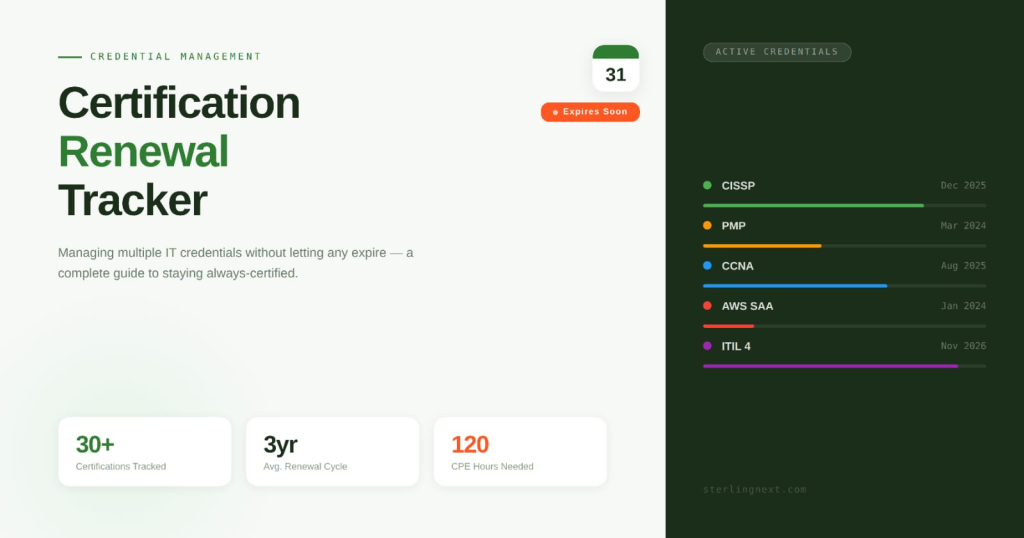
Earning an IT certification takes time, effort, and planning. But after earning the certificate, many professionals forget that renewal is also part of the process. Most IT certifications are valid only for a fixed period, and each one may have different renewal rules.
A certification renewal tracker helps professionals keep everything in one place. Professionals preparing through CompTIA Security+ Certification Training or other IT certification programs should also track renewal dates, learning credits, fees, and proof documents so their credentials remain active without last-minute stress.
Why Certification Renewal Matters
IT skills change quickly because new tools, platforms, security risks, and work methods keep coming into the industry. This is why many certification bodies ask professionals to renew their credentials after a few years.
Renewal shows that a professional is still learning and staying updated. It also helps during job interviews, promotions, client projects, audits, and internal reviews where active certifications may be important.
What Happens If a Certification Expires
If a certification expires, the professional may lose the right to use that credential. In some cases, they may need to pay extra fees, submit a late renewal request, or retake the exam.
This can create problems, especially when the certification is required for a job role or project. A simple renewal tracker helps avoid these issues by showing expiry dates and pending actions clearly.
Why Managing Multiple Credentials Is Difficult
Managing one certification may be easy, but managing many credentials can become confusing. One certification may need continuing education credits, another may need a renewal fee, and another may renew through a higher-level exam.
When the rules are different, depending only on memory is risky. A professional may remember the expiry year but miss the exact date, or they may complete learning activities but forget to save the proof documents.
What Is a Certification Renewal Tracker

A certification renewal tracker is a simple record that stores all important certification details in one place. It can be created in Excel, Google Sheets, Notion, or any tool that is easy to update.
The purpose of the tracker is not to make things complicated. It helps professionals see which certification is active, which one needs attention, and what action should be completed next.
What to Include in the Tracker
A good tracker should include the certification name, issuing body, certification ID, issue date, expiry date, renewal requirement, credits needed, credits completed, renewal fee, proof document status, and renewal status.
It is also helpful to add a “next action” column. This can include simple notes like complete pending credits, upload proof, pay renewal fee, check provider portal, or submit renewal request.
Simple Example of a Renewal Tracker
Let us say an IT professional has three certifications. One expires in December and needs 60 credits, but only 40 credits are completed. The second expires next year but needs an annual fee. The third can be renewed by passing a higher-level exam.
Without a tracker, these details can be easy to miss. With a tracker, the professional can clearly see which certification needs attention first and what action must be planned.
Set Reminders Before the Expiry Date
Waiting until the last month is not a safe approach. Some renewal submissions take time, and sometimes proof documents may be missing or learning activities may not be accepted.
A better method is to set reminders six months, three months, and one month before expiry. This gives enough time to complete pending credits, arrange documents, pay fees, and submit everything before the deadline.
Keep Proof Documents Organized
Many certification renewals need proof documents. These may include course certificates, webinar records, conference certificates, training invoices, or employer letters.
Professionals should save these documents as soon as the activity is completed. A separate folder with clear file names makes it easier to find records when renewal time comes.
Use Learning Activities Carefully
Some learning activities may support more than one certification. For example, a cloud security webinar may help with both cloud and cybersecurity credentials.
Still, every certification body has its own renewal rules. So professionals should check whether the same activity is accepted before using it for multiple certifications.
Review the Tracker Every Month
A certification renewal tracker works only when it is updated regularly. A monthly review helps professionals check upcoming expiry dates, pending credits, saved documents, renewal fees, and submission status.
This monthly check does not take much time. Even a few minutes can prevent missed deadlines and reduce pressure when the renewal date gets closer.
Keep the Tracker Simple
The tracker should be easy to use. If it becomes too detailed or difficult to update, professionals may stop using it after a short time.
Start with basic columns first. Later, color coding, filters, and reminder dates can be added if needed. The main goal is to make renewal actions clear.
Why This Supports Career Growth
Active certifications show that a professional is serious about learning and career growth. They also help build trust during interviews, client discussions, internal reviews, and promotion decisions.
Professionals who want simple learning support and career-focused certification options can explore SterlingNext Training Programs as part of their long-term development plan.
Conclusion:
Managing multiple IT credentials is not only about remembering expiry dates. Each certification may have different renewal rules, fees, credits, and document requirements.
A certification renewal tracker gives professionals a simple way to stay organized. Earning a certification is important, but keeping it active is equally important for long-term career growth.